
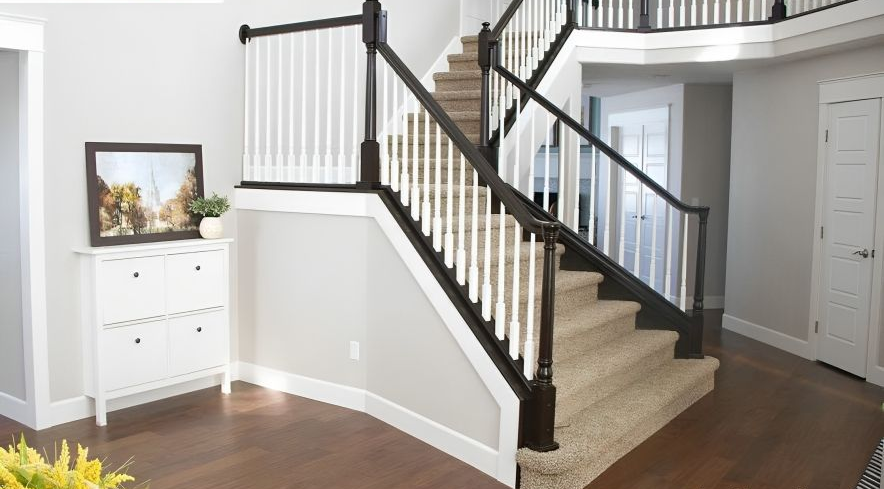
Turning dark wood surfaces into crisp white finishes has become one of the highest-impact interior upgrades a homeowner can make. The shift instantly brightens a room, modernizes the aesthetic, and gives older homes a fresh, timeless feel without major renovation.
Wood-to-white work is no longer limited to cabinetry. It extends to trim, doors, furniture and structural pieces like staircases and bannisters — and the visual impact is immediate: spaces feel larger, cleaner and more welcoming.
Understanding Wood-to-White Transformations
What It Entails
This is the process of converting dark, stained wood into a bright, opaque white finish using a careful sequence of preparation, priming and painting. It is not just painting — it requires the right products and techniques to keep the original color from bleeding through later.
Why It’s Trending
Dark wood, while classic, can make rooms feel heavy and dated. Switching to white opens those rooms up immediately, which is why the look has become the default for modernizing older Madison-area homes without a gut remodel.
Applications in Interior Design
Common uses include kitchen cabinets, trim and crown molding, doors, furniture, and staircases and bannisters. Each application brings its own prep considerations, but the visual payoff is consistent.
Benefits of Going White
More Light and Visual Space
White surfaces reflect light, so even rooms with limited natural light feel larger and more open after the change.
Property Value
Bright, neutral interiors consistently sell faster. White finishes read as clean, well-maintained and modern — all factors that influence perceived value.
Design Versatility
White woodwork acts as a neutral foundation that works with bold accents, natural textures, or minimalist palettes. It is one of the easiest backdrops to live with long-term.
Maintenance and Longevity
Modern white cabinet enamels are durable and washable. With proper application and basic care, they hold their finish for many years.
Challenges in Wood-to-White Transformations
Surface Preparation
Dark wood usually carries existing stain or varnish. Without proper sanding and cleaning, the new finish will peel or streak — preparation is by far the most common failure point.
Choosing the Right Products
Dark wood needs a high-quality stain-blocking primer to prevent bleed-through. Pairing the wrong primer with the wrong paint is what produces yellowing and dullness within a year.
Achieving a Professional Finish
Multiple thin coats give an even, mark-free surface. Edges, corners and trim details need extra attention — that is what separates a pro job from a clearly DIY one.
Time and Labor
Wood-to-white work is labor-intensive. Most multi-room projects take several days and require disciplined drying time between coats.
Step-by-Step Transformation
Step 1 — Assessment and Cleaning
Inspect for damage, then clean every surface with a degreaser. Any dust or residue left in place will compromise adhesion downstream.
Step 2 — Sanding
Light sanding gives the primer a surface to grip. Detailed millwork gets sanded with finer grits or sanding sponges to preserve the profile.
Step 3 — Priming
A high-quality stain-blocking primer goes down across all surfaces. This is what stops the underlying dark color from ghosting through the white.
Step 4 — Painting
Multiple thin coats of white paint build opacity and depth. Brushes handle the details; rollers (or spray) handle the flat surfaces. Even strokes prevent streaking.
Step 5 — Finishing
Inspect, sand any high spots, and apply a protective topcoat where warranted. This is the step that locks in the durability.
Real-World Tip
On cabinets, take the doors and hardware off first. Painting components separately produces a noticeably cleaner finish and avoids drips.
Best Practices for Long-Lasting Results
Quality Materials
Quality primers, paints and brushes pay for themselves. Cheap product is what makes the project look DIY and forces re-do work later.
Environmental Conditions
Aim for 60–75°F and low humidity. Coatings cure properly at those conditions; outside that range, finish quality drops quickly.
Professional Techniques
Feathering brush strokes, back-rolling after brushing, and applying multiple thin coats are the techniques that produce the smooth, even finish you see on professional work.
Regular Maintenance
White shows dirt and scuffs faster than dark finishes. Mild cleaners and quick touch-ups keep it looking fresh.
Wood-to-White Specialists in Madison, WI
Callapainter has spent 21+ years specializing in wood-to-white transformations across Madison and Dane County. We bring the prep discipline, primers, and sprayed-enamel application that make the difference between a finish that lasts a season and one that lasts a decade. See our wood-to-white service or request a free estimate.