
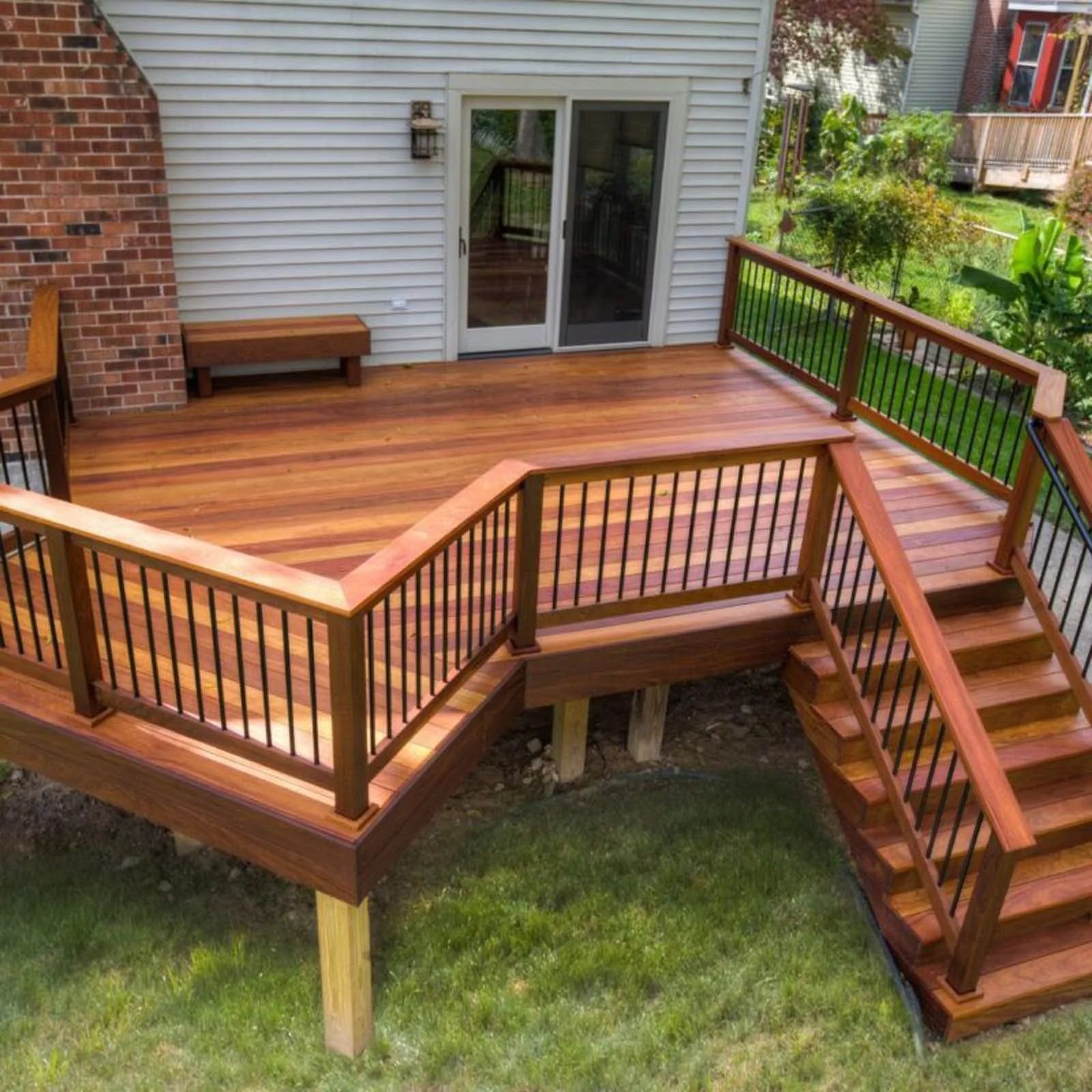
Painting and staining are the two simplest things you can do to protect a deck or fence — and the two things most likely to be neglected until damage is already done. Outdoor wood is exposed to sunlight, rain, humidity, temperature swings and biological threats every single day, and without a protective coating it deteriorates fast: structural weakness, discoloration, cracking, and eventually replacement.
A coating does two jobs at once. Paint forms a sealed film across the surface; stain penetrates into the fibers. Both reduce moisture absorption, block UV, and slow biological damage. Picking between them depends on the climate, the wood, and the look you want — but the absence of either dramatically shortens the life of the structure.
1. A Protective Barrier Against Weather
Shielding Wood from Moisture
Moisture is the single most destructive force on outdoor wood. Once water penetrates untreated boards, it triggers swelling, warping and rot. Paint and stain create a layer that slows that absorption — paint by sealing the surface, stain by saturating the fibers — and that one job alone adds years of useful life.
Resisting Sun and UV Exposure
UV breaks down lignin in wood, which causes graying and surface brittleness. Coatings either block or absorb that UV, so the wood underneath keeps its color and strength.
2. Preventing Biological Damage
Mold and Mildew
Damp wood is the perfect host for mold and mildew. By reducing how much moisture the surface holds, paint and stain make it much harder for fungus to take hold — keeping decks and fences cleaner and structurally sound for longer.
Insects and Pests
Termites, carpenter ants and other wood-boring insects target untreated wood first. Coated surfaces are less attractive to them, and deeply penetrating stains add internal resistance that further reduces infestation risk.
3. Enhancing Structural Longevity
Reducing Cracking and Splitting
Wood naturally expands and contracts with temperature. Coatings stabilize moisture content, which reduces the size of those swings and the cracking that comes with them.
Strengthening Load-Bearing Components
Decks carry real weight — furniture, foot traffic, snow. Maintaining the finish on rails, posts and joists preserves the strength of those load-bearing parts and keeps the deck safe to use.
4. Aesthetic Improvement and Property Value
Visual Appeal
A freshly stained deck or painted fence makes the whole property look cared-for. Stain shows off the grain; paint gives a clean, uniform finish. Either way, curb appeal jumps.
Market Value
Buyers read well-maintained outdoor structures as a sign that the rest of the home has been taken care of. Protective coatings consistently return their cost at resale through stronger first impressions.
5. Maintenance Efficiency and Cost Savings
Fewer Major Repairs
Routine painting and staining heads off the cracks, rot and structural failures that turn into expensive rebuilds. The maintenance cycle is predictable, which is far cheaper than emergency repair.
Lower Long-Term Cost
The upfront cost of a coating system is small compared to replacing boards, panels or whole fence runs. Over a decade, regular re-staining is one of the most cost-effective maintenance strategies for outdoor wood there is.
6. Best Practices for Long-Lasting Protection
Surface Preparation
Cleaning, sanding and removing any old, failing coating are non-negotiable. Most premature failures trace straight back to skipped prep.
Product Choice and Application
Match the product to the climate, apply with consistent technique, and respect the drying times. The same product can either last 5 years or last 1 year depending entirely on application.
Dependable Deck & Fence Coatings in Madison, WI
Callapainter, based in Madison with 21+ years of experience, finishes decks and fences for long life — not just for a good photo on day one. We prep meticulously, match the product to the wood and the weather, and apply for durability that holds up to Wisconsin seasons. See our full decks and fences service, or read the best paints and stains for outdoor wood.